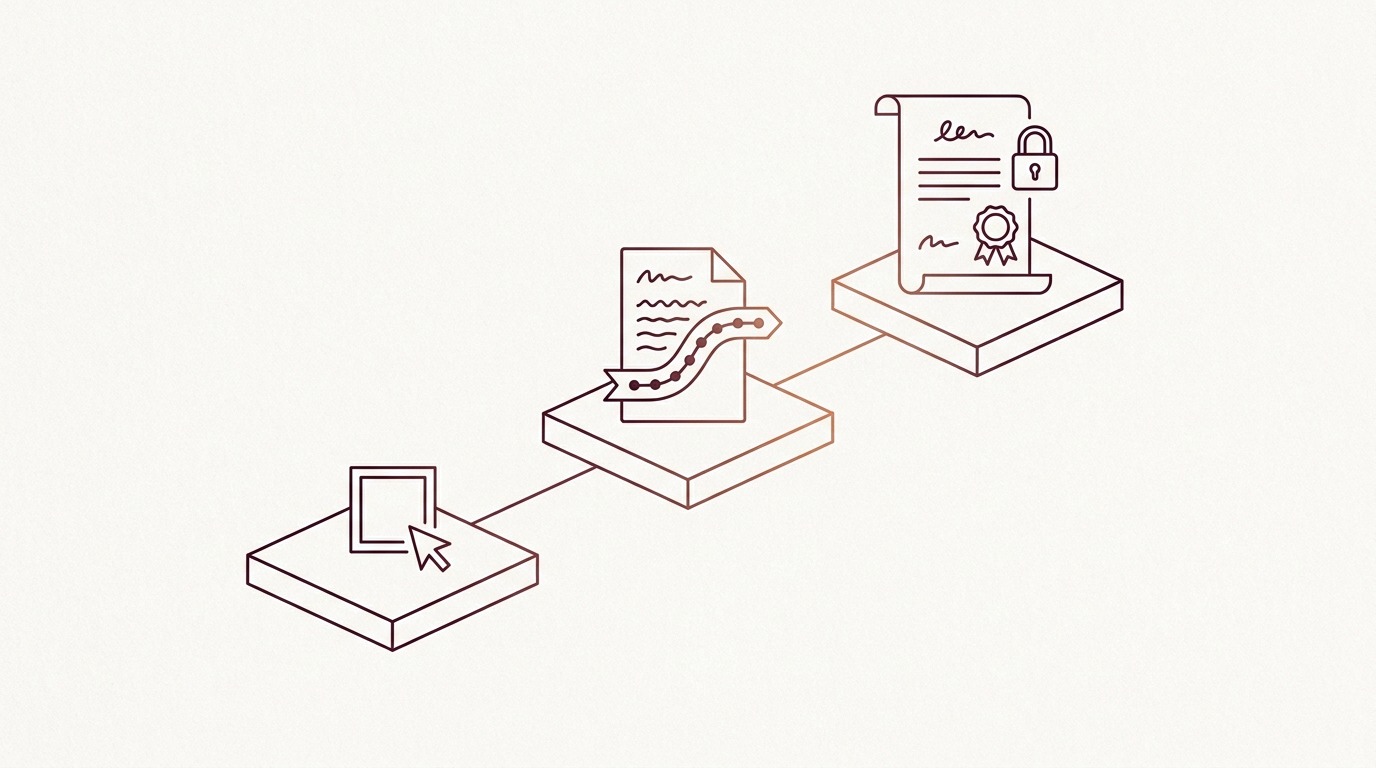
From an acceptance click to an ICP-Brasil certificate: each level of electronic signature leaves traces of its own, and each one calls for its own examination when authorship is challenged.
Brazilian Law 14,063/2020 organised electronic signatures into three levels, and that classification decides the fate of any challenge: what each level proves on its own, what depends on a forensic examination and which method the examination must follow. The qualified signature, backed by an ICP-Brasil certificate, further carries the presumption of truthfulness of art. 10 of Provisional Measure 2,200-2/2001, a presumption that is rebuttable: it admits evidence to the contrary, and that evidence is technical.

Gov.br accounts, the Brazilian federal digital identity, follow a similar layered logic: the account level defines the robustness of the identification behind the signature. Knowing at which level the document was signed is the first step in any feasibility assessment.

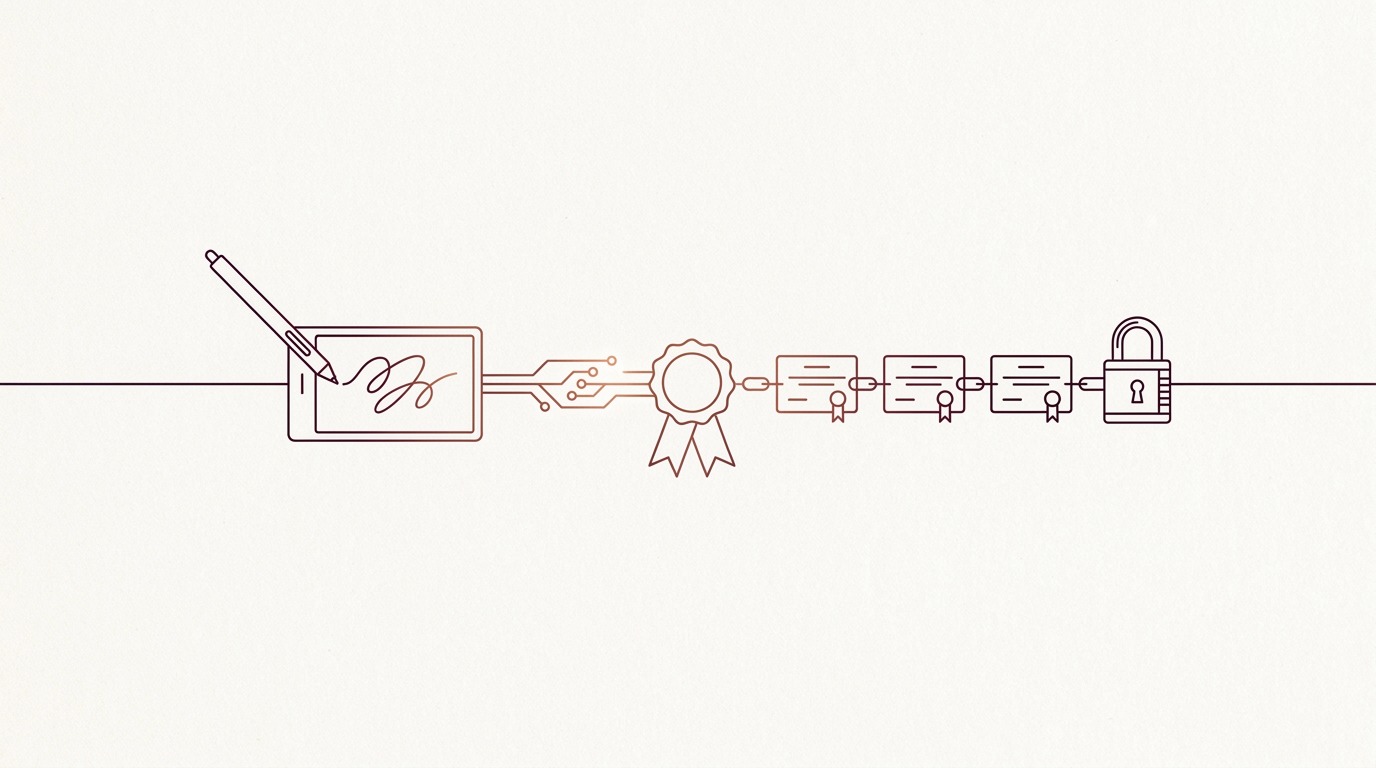
Certification chain up to the root CA, status of the certificate at the moment of signing (OCSP and revocation lists), RFC 3161 time stamp, PAdES conformity and the coverage of the signature over the content (byte range): does the signature cover everything it should cover?
IP address, geolocation, device, authentication method and hash of every platform event, and also the typical weaknesses: a signing link forwarded to a third party, a compromised e-mail account, a fragile selfie check. The trail proves the process; the examination checks whether the process proves the person.
What remains is the context and the systems: logs, access records, the behaviour of the parties before and after signing, traces on devices. This is where the examination meets computer forensics, and where feasibility must be assessed frankly before any promise is made.
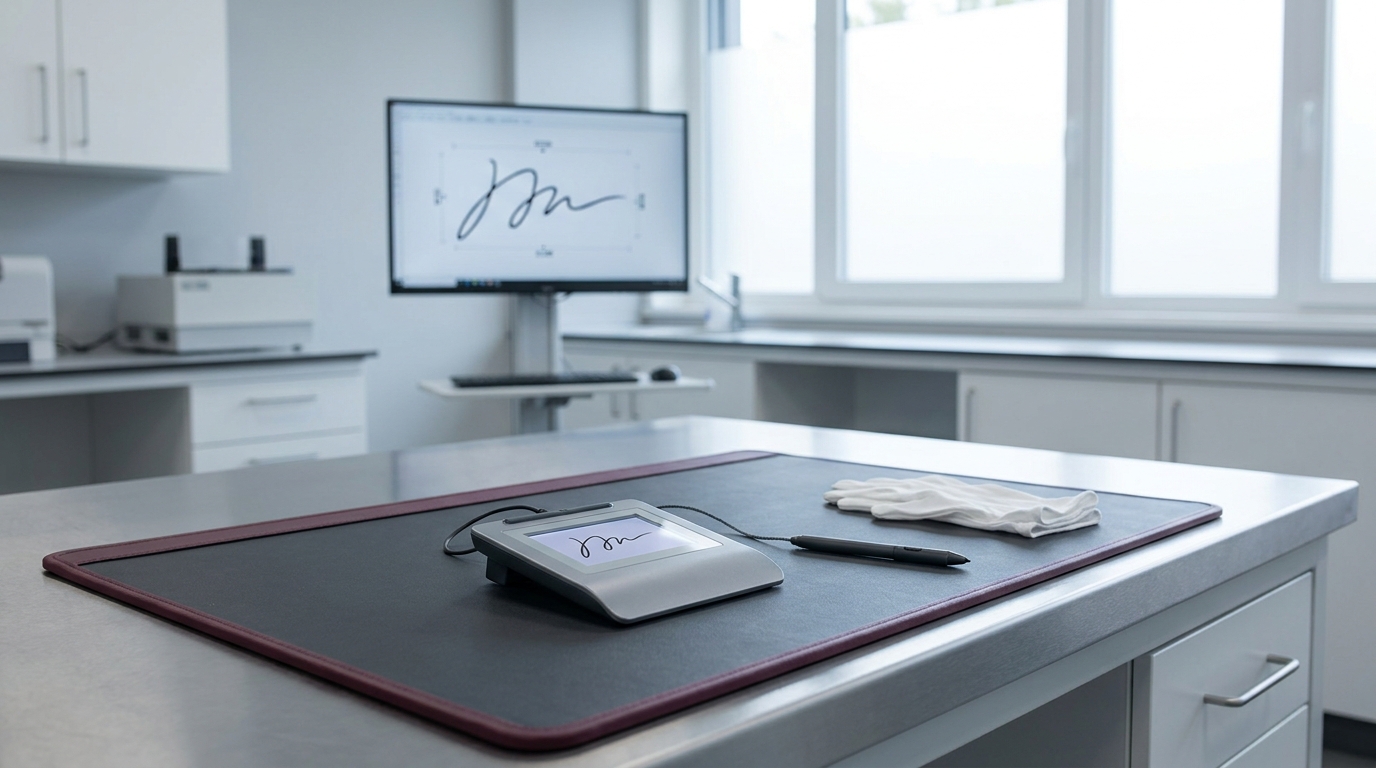
When the signature is written with a pen on a tablet or screen, many platforms record the dynamics of the gesture: coordinates, timing and, on certain devices, pressure. The paper is gone, but the gesture is not: the neuromotor automatism that individualises handwriting remains fully present in the captured data.
The examination brings the two disciplines together: forensic handwriting examination reads the gesture (initial attacks, terminal strokes, rhythm, proportions), and computational analysis reads the data that recorded it. An imitation that fools the eye in a static image usually betrays itself in the dynamics: the forger's slow, watched stroke does not reproduce the rhythm of a practised hand.
The most common scenario, however, is a different one, and the market rarely explains it: many contracts, including banking ones, are signed on ordinary tablets, which capture neither pressure nor speed nor the evolution of the movement. These are graphic signing devices, not biometric recording devices: what they produce is only a rasterised image of the stroke. The difference from a signature capture tablet, which records the artefacts and metadata essential to technical forensic analysis, is the difference between a photograph of the gesture and the gesture itself.
In a challenge, this changes everything: on a rasterised image, the examination works with the caveats attaching to any reproduction, and the expert report states that limitation; on dynamic data, the examination reaches the writer's hand. Knowing which device captured the signature is very often the first question of the case. It is "the same expert masters both the paper and the system" in its most literal form. Explore forensic handwriting examination →
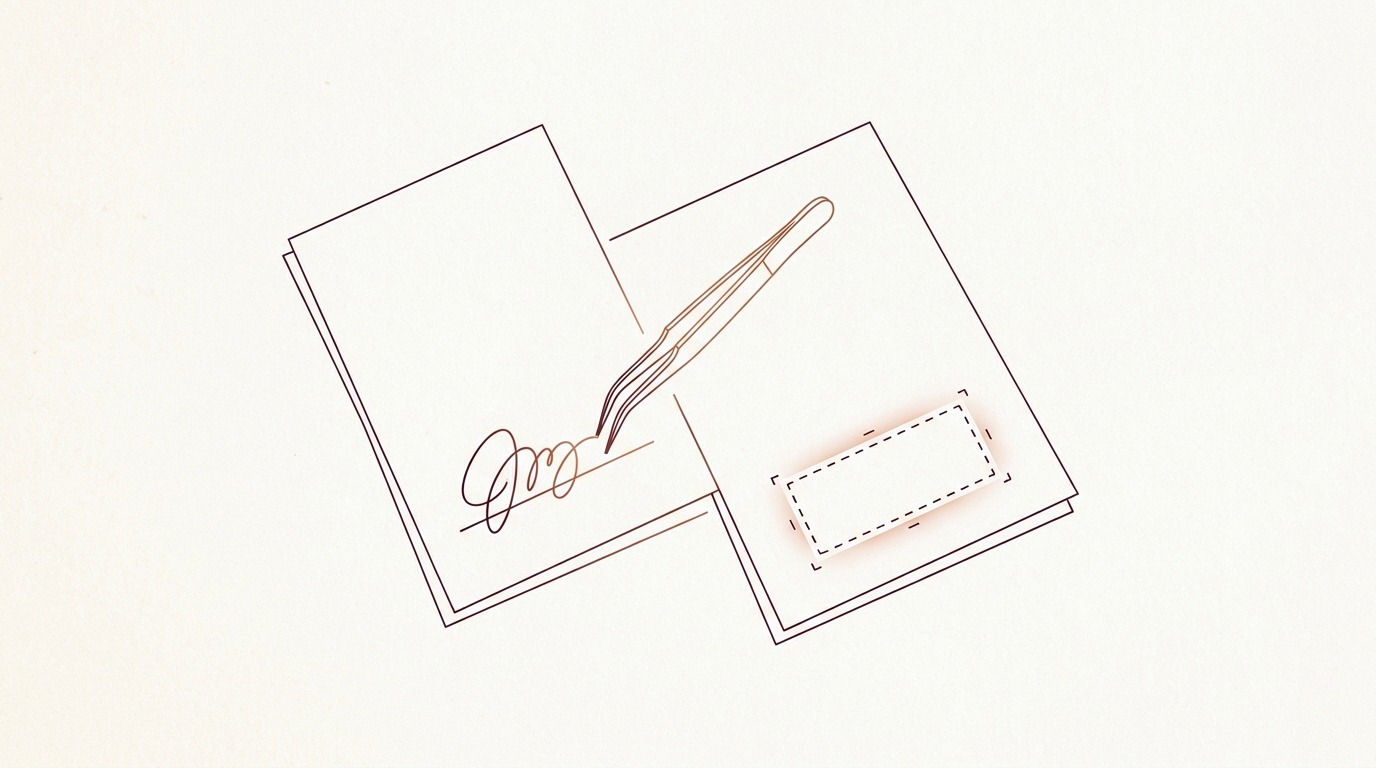
An authentic signature, scanned from a legitimate document and digitally pasted onto another, looks perfect precisely because it is genuine. This is what the laboratory calls a digital transplant, and it has been appearing in cases with growing frequency, mainly in digital documents.
The mechanism is simple, and that is what makes it dangerous: the victim has signed some legitimate document at some point in life, an old contract, a power of attorney, a form. That document circulates as a PDF or an image, and in it the signature is just a set of pixels. The fraudster crops it with any editor, adjusts the size and drops it onto the new document: a contract that never existed, an amendment nobody agreed to, an authorisation that was never given. Printed or filed with the court, the result fools the eye, and it even fools a handwriting comparison carried out in isolation, because the stroke itself is genuine.
The defence lies in a combined examination. On the stroke, the handwriting comparison checks what the copy carries; on the file, the structural examination looks for what the paste-in cannot hide: the cropping halo around the signature, the difference in resolution and compression between it and the rest of the page, the exact point-by-point duplication when the same signature appears in more than one document (no person signs twice in an identical way), and the internal layers of the file, which reveal the inserted image object and the moment it was added.

This is why a digital transplant requires a combined examination: handwriting analysis on the stroke, structural analysis on the file. Digital Questioned Document Examination → Forensic Handwriting and Questioned Documents →
See also
Digital Questioned Document Examination → Forensic Handwriting and Questioned Documents → Computer Forensics → International Practice →
Acting as party-appointed expert (technical assistant). Forensic analysis of the electronic signature platform revealed flaws in the authentication process, supporting a favourable decision at first instance.
Before deciding, it is worth seeing what has already come through this laboratory: cases described without identifying the parties, in the format of challenge, method and result.
The intruder's control channel was written into smart contracts. The examination decoded what he had deleted and handed the authorities concrete routes to identification.
See the case Negative proofThe official examination had concluded that he took part. The re-examination showed the links were false positives, and the accused person was cleared.
See the case