Every file carries its own history: metadata, layers, versions and dates. The examination reads what the document shows and what it tries to hide.
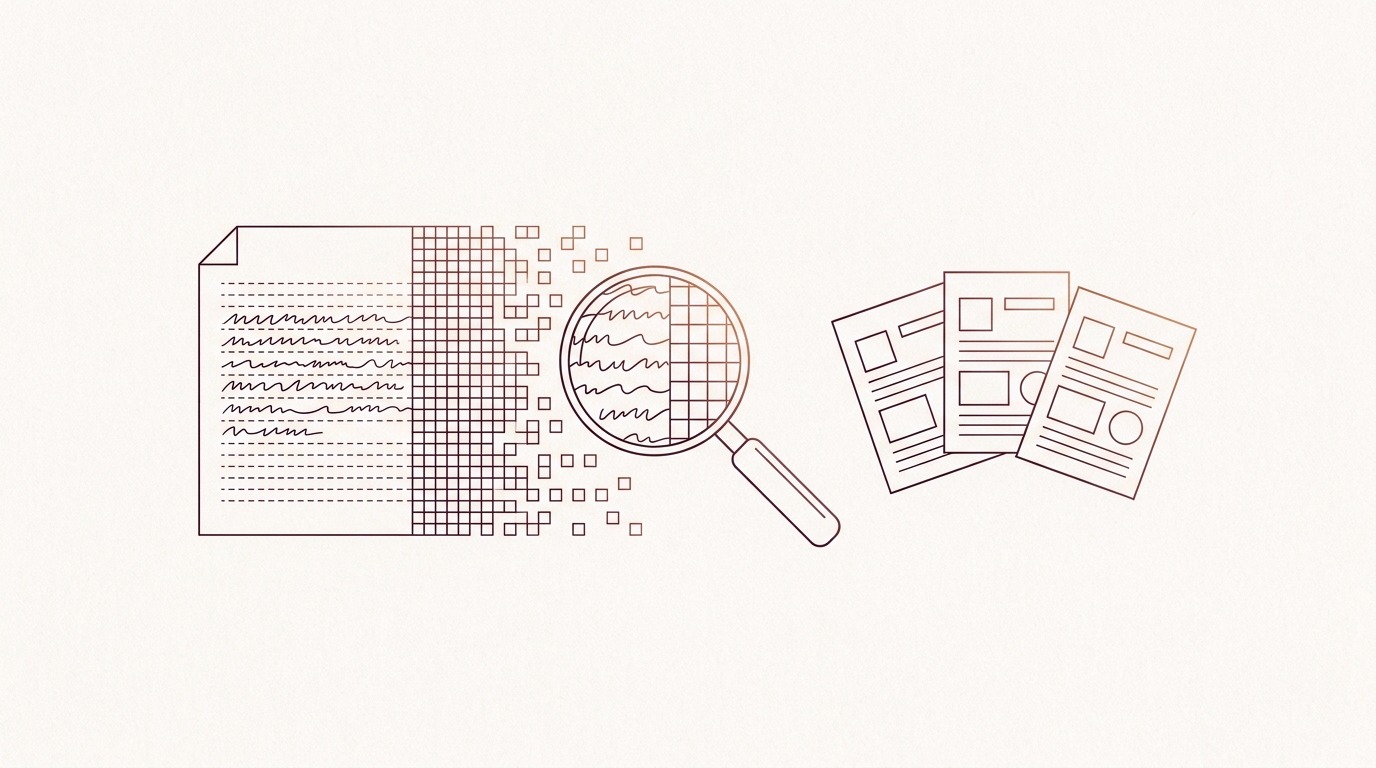
Before any analysis, the examination answers the question that defines the whole method: is the file born-digital, created and completed on a computer without ever existing on paper, or is it the scan of a physical document? Confusing the two natures is one of the most common errors in the field: "examining the PDF" when what is actually under examination is the image of a sheet of paper nobody has seen.
In a born-digital document, the file itself is the document, and its internal structure holds the whole story. In a scanned one, the file is merely the portrait: the graphic content (signature, text, layout) calls for the method of classical forensic handwriting and questioned document examination, while the examination of the file establishes when and how the portrait was produced, and whether it was edited afterwards.

Digital questioned document examination is a discipline unique to VALLIM Perícias: the bridge between the Doc Lab and the Data Lab.

Far beyond the "File properties" panel: the Info dictionary (/Author, /Producer, /CreationDate, /ModDate), XMP metadata and the consistency between the declared authoring software and the actual structure of the objects. When the label and the content do not match, there is a story to uncover.
A PDF carries the fonts it uses. A typeface released after the document's declared date is a digital anachronism: the file's equivalent of ink that did not yet exist at the time of the paper.
A hash is the cryptographic fingerprint of the file: any later change, of a single bit, produces a different hash. Recorded on receipt, it demonstrates that the object examined is exactly the one delivered.
Did the document exist on the date it declares? Time stamps, filing records, e-mail trails and cloud version histories make it possible to test the alleged date against the traces left in the systems the file passed through.
Synthetic receipts, certificates and contracts: generation artefacts, typographic and layout inconsistencies, and comparison against the issuer's legitimate template. The fraud has become easier to produce, and it still leaves traces.
How the file reaches the examination matters as much as the examination itself: receipt of the original (never a "screenshot of the PDF"), a hash recorded at first contact, and documented preservation and mirroring through to the report.
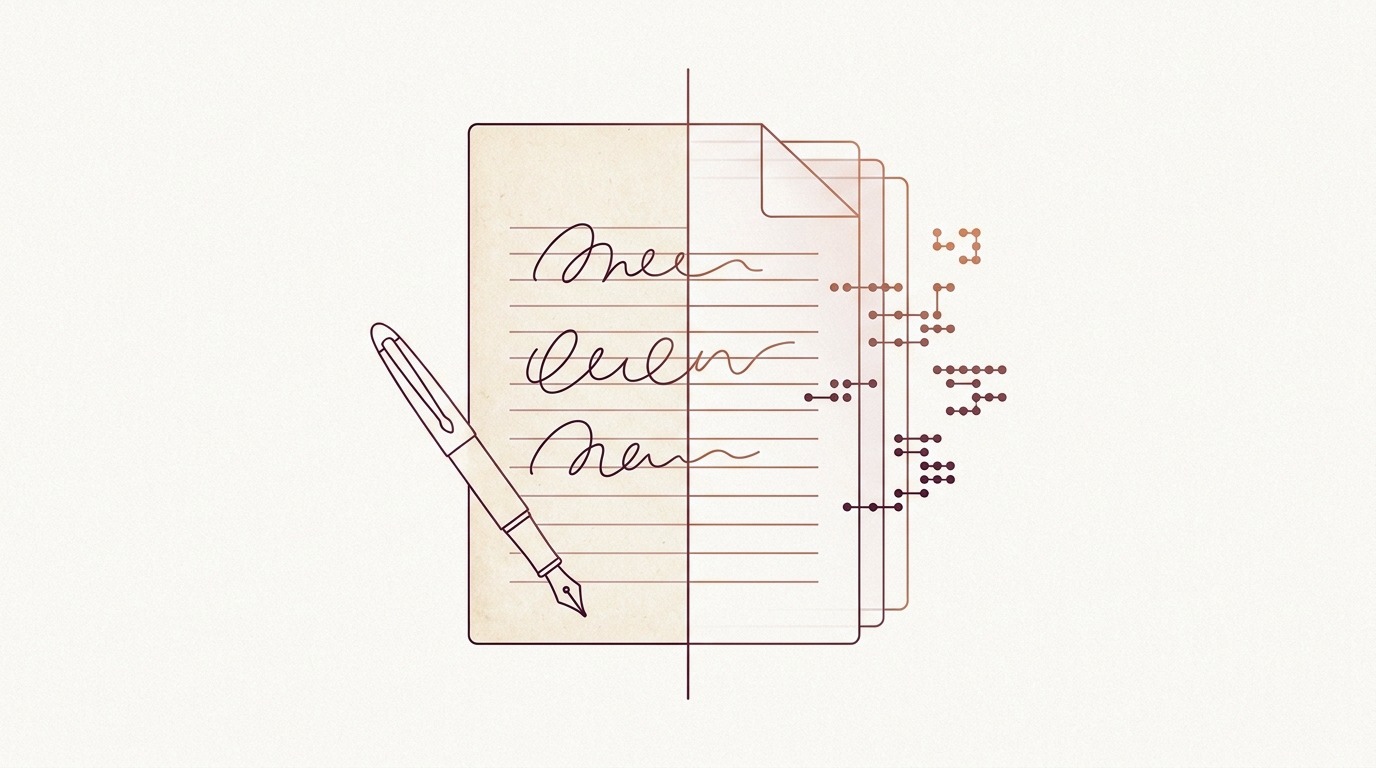
In the Middle Ages, parchments were scraped clean and written over; under the right light, the old text reappears beneath the new. That is the palimpsest. A PDF can behave in exactly the same way: when saved by appending (what is called incremental editing), the file does not erase what was there, it merely writes over it, keeping the earlier versions inside itself.
Structural examination identifies the traces of that process (multiple cross-reference tables, overwritten objects) and reconstructs the file's internal timeline: what was there before, what was added and in what order. An altered figure, an interpolated clause or a signature inserted later may be recorded inside the very document that hides them.
Not every PDF keeps those layers: a full save discards them. That is why the chain of custody is decisive: every conversion and every forward can destroy the layer that would decide the case.
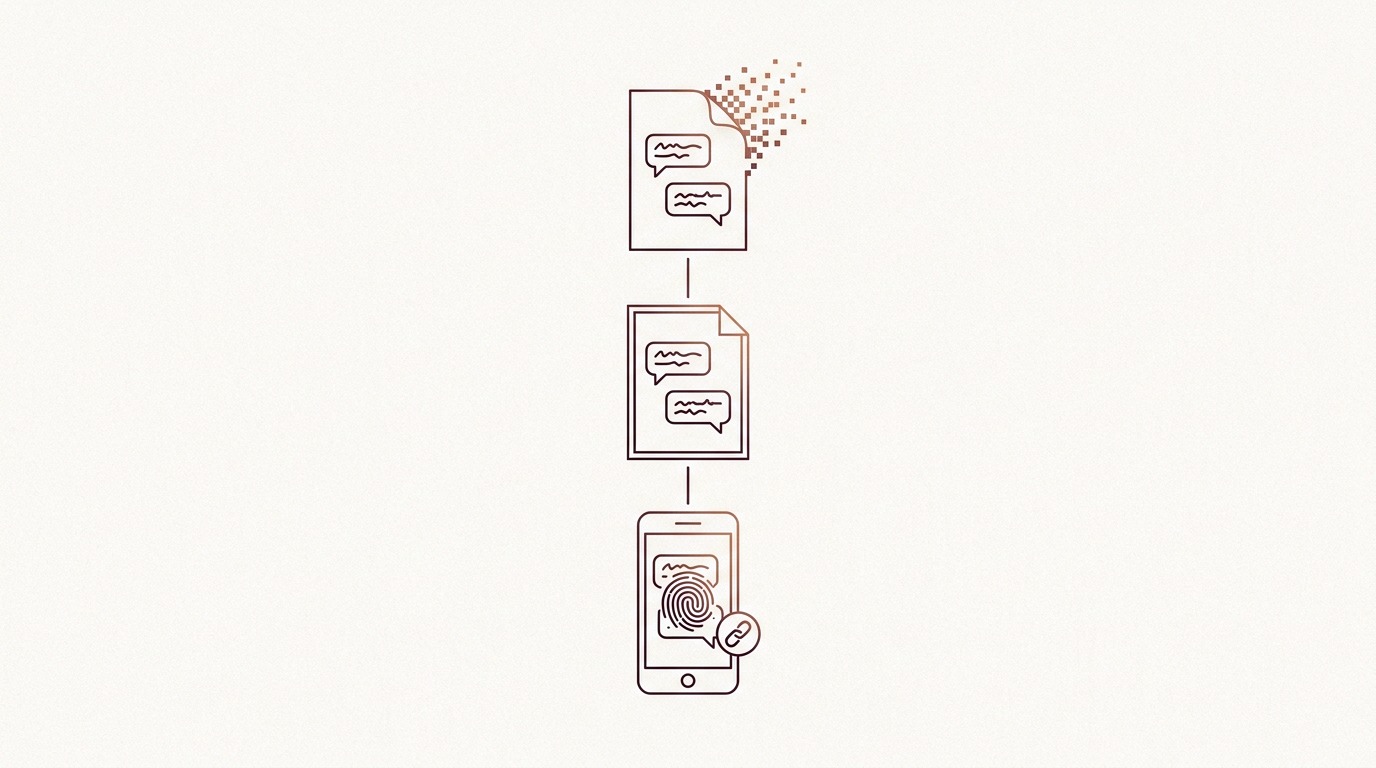
WhatsApp and other app conversations reach the case file in three forms, and they are not worth the same. The evidential hierarchy is stated in the report:

When the conversation is at the centre of the dispute, digital questioned document examination and computer forensics stop being two examinations: here, they are a single piece of work, conducted under one and the same method. See the Computer Forensics practice →
The original file is received through the channel advised, and the hash recorded at first contact. From then on, any later alteration is demonstrable.
Nature of the document (born-digital or scanned), authoring software, metadata and layers: the map of the file before any specific examination.
As the case requires: incremental editing, font and layout anachronisms, timeliness, comparison against the legitimate template, indications of staging or of AI generation.
Every finding documented so that another expert, following the same steps on the same file, reaches the same result. That is what sustains the evidence in court.
See also
Electronic Signatures → Forensic Handwriting and Questioned Document Examination → Computer Forensics →
Forensic analysis of metadata and logs revealed that the signature had been applied from a device the contracting party had never used.
Before deciding, it is worth seeing what has already come through this laboratory: cases described without identifying the parties, in the format of challenge, method and result.
The intruder's control channel was written into smart contracts. The examination decoded what he had deleted and handed the authorities concrete routes to identification.
See the case Negative proofThe official examination had concluded that he took part. The re-examination showed the links were false positives, and the accused person was cleared.
See the case