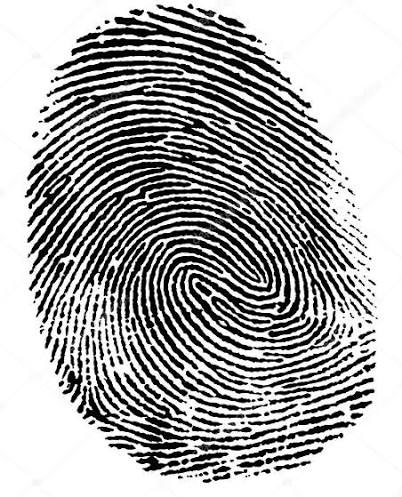
In contracts signed by request, in receipts and in releases, the fingerprint is often the holder's only trace. It can be examined, but only when the impression gathers enough minutiae, and an honest report says when it does not.
Where the fingerprint appears
When the only trace left by the holder is a thumb
In contracts executed by people who cannot write, in payment receipts, in releases and in instruments drawn up before a notary, the fingerprint usually accompanies the signature by proxy or replaces the handwritten signature. In such documents, it is the only trace left by the holder of the right under discussion, and it is on that trace that the dispute is decided.
Questioned document examination of a fingerprint answers two questions in sequence, and the order matters. First: is this impression usable? Then, and only if the answer is yes: does it come from the finger indicated as the exemplar? Skipping the first question is the mistake that produces categorical reports about ink smudges.
The papillary pattern: ridges, core and delta
What makes an impression usable
Sufficient and continuous papillary area, not merely an edge of the finger
Ridge clarity: the right amount of ink, with no blurring or gaps
Quantity and quality of minutiae, the characteristic points of the pattern
Absence of distortion from slippage or excessive pressure
A substrate that preserved the impression, with no fading or fold across the area
What the examination looks for
System and pattern type of the papillary design, in the initial screening
Comparison of minutiae between the questioned fingerprint and the collected exemplar
Agreement in relative position, and not only in number
Signs of reproduction: transferred impression, fingerprint stamp, photocopy
Compatibility between the ink of the fingerprint and that of the rest of the document
Collecting the exemplar
Without an adequate exemplar there is no comparison
The exemplar is the half of the examination that tends to be neglected. A good-quality questioned fingerprint cannot rescue a standard taken in haste, with too much ink and with no record of which finger produced each impression.
IdentificationFinger-by-finger recording, individually identified, of both hands, with the identification and signature of the person who provided the exemplar
TechniqueControlled inking and full rolling, so as to reproduce the papillary area shown in the questioned document
RepetitionMore than one impression per finger: pressure variations are part of the exemplar and must be documented
Deceased personsWhen the holder has died, the exemplar is sought in identity documents and earlier official records, through a court order
CustodyDocumented collection, sealed material and a handling trail, as with any trace submitted for examination
The stated limit
A blurred fingerprint does not become a conclusion through persistence
A large share of the fingerprints affixed to contracts arrive with excessive ink, a partial area or slippage distortion. When the impression does not gather minutiae in sufficient quantity and quality, the report declares it unusable and explains the technical reason. That is a useful answer for the proceedings: it prevents a party from building its case on a trace that cannot support it.
The object of this page is the fingerprint affixed to a document, which is the case in the overwhelming majority of instructions: the impression is already on the paper and the examination discusses whether it can be used. The development of latent fingerprints on surfaces, with powder and lifting of the trace, is carried out on an occasional basis, when the case calls for it and preservation conditions allow.
Before deciding, it is worth seeing what has already come through this laboratory: cases described without identifying the parties, in the format of challenge, method and result.